
One Christmas Bouquet, Five Different Ways to Sell It
You’ve photographed the hero in your stunning Christmas collection. It looks glorious. You open Instagram, start writing the caption and naturally begin with the flowers.

Something like:
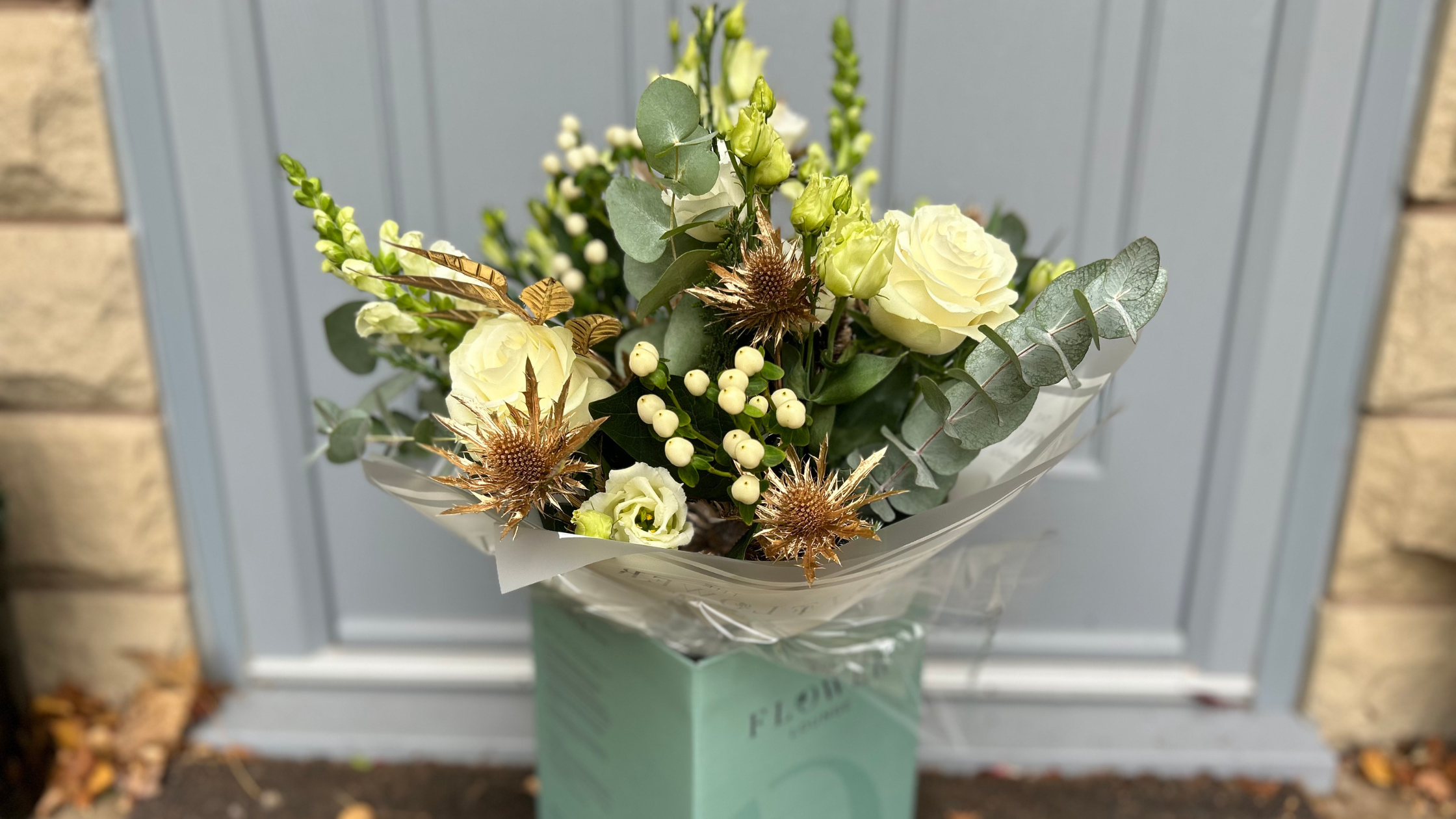
A rich Christmas bouquet filled with deep red roses, hydrangea, seasonal foliage and textural stems, finished with touches of gold for a little festive sparkle. Hand-tied and full of colour, movement and all the gorgeous seasonal ingredients we love using at this time of year.
A lovely description isn’t it?
But that’s all it is: a description. Not necessarily a reason to buy.
It’s a trap we see many florists falling into. Yet at Christmas, when your customer is surrounded by all the many things they could spend their money on, that distinction matters.
Why does your customer need a reason to buy?
Your customer probably isn’t sitting at home thinking, I really need some red roses, hydrangea and seasonal foliage in my life.
They’re more likely to be thinking things like:
What on earth do I buy her?
I want to send something because we won’t see them this Christmas.
I really want my home to feel stylishly festive this year.
I’ve still got six people left on the Christmas list.
That’s the gap your marketing has to bridge.
As we talk about in our Sales-Ick Swipe File, customers don’t often buy flowers purely for the flowers themselves. They buy them to celebrate, surprise, thank, remember, impress and show they care.
So ask yourself: “What could this bouquet mean to the person buying it?”
As an experiment, let’s take exactly the same Christmas bouquet and look at four alternative ways you could sell it from the more ingredient-led approach we opened with.

1. Emotion-led: sell how you want someone to feel
Here, the bouquet becomes a way to communicate something.
For the person you want to make feel really special this Christmas. The one who has been there all year, who deserves more than a rushed present grabbed at the last minute, or who you simply want to remind just how much they mean to you. Big, joyful and made to create that lovely “oh wow” moment when it arrives.
We haven’t changed the flowers, we’ve changed what they represent.
Instead of asking your customer to get excited about the contents of the bouquet, you’re helping them picture the reaction it might create. That works harder because emotion gives the purchase meaning. The customer can start connecting the product with their mum, their best friend, their sister, their customer, their neighbour.
Suddenly it isn’t simply a Christmas bouquet. It’s a way to make somebody feel appreciated.
2. Problem-led: solve the Christmas headache
Christmas is full of little problems your customers would quite happily pay someone else to solve. One of them is gifting.
Still staring at the name on your Christmas list that you have absolutely no idea what to buy for? This is your way out. No guessing sizes, no wondering whether they already own one, no panic-buying another candle. Just a properly generous Christmas bouquet that feels thoughtful and, even better, can be delivered straight to their door!
This angle starts with the customer’s frustration rather than your product.
And that matters because somebody who hasn’t actively thought flowers may still recognise themselves immediately in I have no idea what to buy them.
You’re showing them that something you already sell can solve the problem they already have such as gifting fatigue or getting chance to drop it off. That’s very different from pushing flowers at someone.

3. Occasion-led: put the flowers into a real moment
Sometimes the strongest route into a product is a situation your customer recognises.
For example:
Not seeing them on Christmas Day? Send your hug ahead. Whether they’re spending Christmas somewhere else, you’re miles apart this year or you simply won’t get the chance to exchange gifts in person, this is a lovely way to make sure they still know you’re thinking of them.
Now we’re not marketing to everybody who might buy Christmas flowers. We’re talking very specifically to the person thinking, Actually, that’s us this year. That specificity is useful.
When customers recognise their own situation in your marketing, they don’t have to work as hard to understand whether the product is relevant to them.
And the same bouquet could belong to lots of different Christmas moments. You could sell it to the person visiting family for Christmas for example:
Turning up at someone else’s for Christmas? Bring something that says “thank you for doing all the hard work” considerably better than a bottle picked up on the way.
Same flowers but a completely different reason to buy them.

4. Outcome-led: show them what success looks like
For this bouquet, perhaps the customer doesn’t simply want to get a present sorted. They want to go above and beyond.
Want to be the person who absolutely nails the Christmas gift this year? This is the kind of bouquet that gets an immediate “WOW”, earns a prime spot in the house and has them telling everyone who sent it. Big, joyful and just sparkly enough to feel properly special, we’ll help you make some jaws-drop.
That’s a very different motivation from I don’t know what to buy.
This customer may actually enjoy choosing presents. They want their gift to stand out. They want the recipient to love it. Perhaps, if we’re being completely honest, they wouldn’t mind getting a little bit of credit for being the person who chose it either.
So show them the outcome. Help them picture what happens after they click buy.
Same bouquet. Five different stories.
In a nutshell:
Ingredient-led: What is it?
Emotion-led: How could it make someone feel?
Problem-led: What frustration could it solve?
Occasion-led: What moment does it belong to?
Outcome-led: What does your customer want to happen?
And you don’t have to pick one forever.
A strong product description might lead with an outcome and then explain the ingredients. An Instagram post could focus on the occasion. An email might start with the problem. Another week, you might sell exactly the same bouquet through emotion.
That’s why finding better words for what you sell gives you so much more marketing to work with as well as making it more effective to boot.
Want a little help finding those words?
If you haven’t already got our Florist Sales-Ick Swipe File, start there. It’s packed with practical social hooks, email nudges, blog-to-sales bridges and conversation starters designed to help you move away from simply describing the flowers and towards the reasons your customers should care.
And if you want to go deeper, our Stop Selling the Flowers Worker Wing workshop is now available to watch on replay.
In just under an hour, we’ll help you rethink the language you use to market what you sell so it feels more natural, more useful and considerably less icky.